
Agrivoltaics Show Promise for Heat-Stressed Crops in Europe
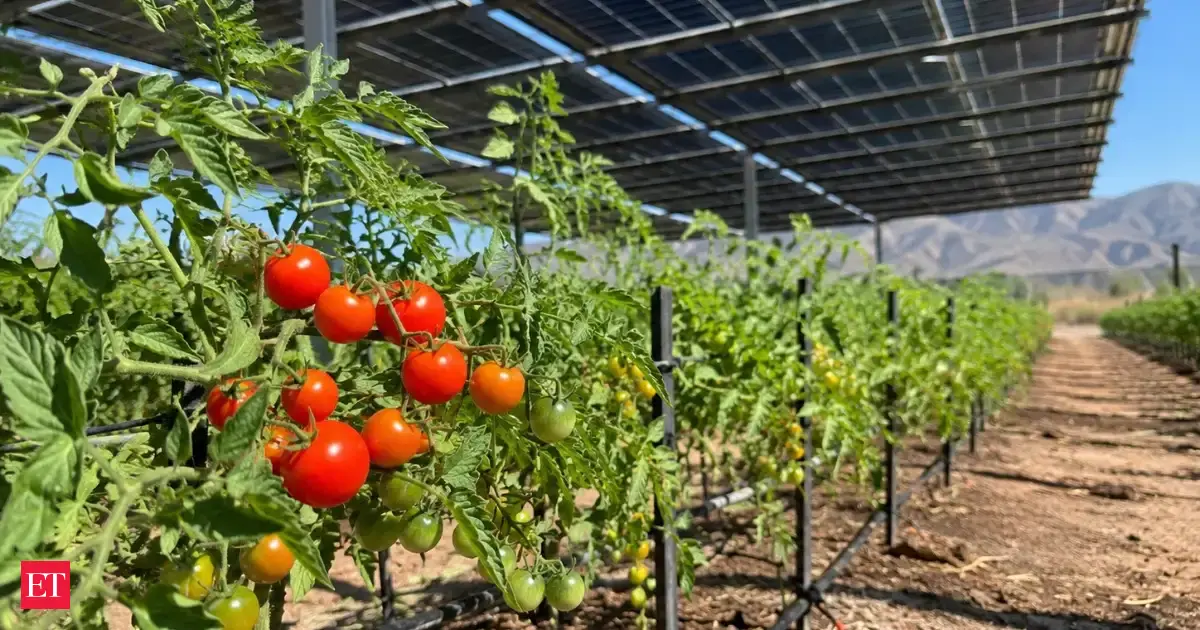
Recent studies conducted in Arizona have highlighted the potential of agrivoltaics—the integration of solar panels with crop production—to combat environmental stress. By placing crops beneath solar arrays, researchers observed that cherry tomatoes required 50% less irrigation while maintaining yield, largely because the panels provided shade that reduced midday water stress by 40%.
For European farmers, this is highly relevant. As heatwaves become more frequent and water scarcity impacts regions like Southern Europe, the dual use of agricultural land for renewable energy and food production is moving from a niche concept to a potential necessity. Protecting sensitive crops from extreme light and heat exposure can stabilize yields when traditional open-field methods struggle.
The system works by buffering the microclimate around the plant. High temperatures and intense solar radiation often trigger 'midday depression' in plants, where photosynthesis slows down to preserve moisture. By providing partial shade, solar panels reduce the vapor pressure deficit, keeping the plant active for longer periods during the day.
While this technology is most mature in dry climates, the modular nature of current agrivoltaic designs allows for implementation across various European latitudes. Farmers considering these systems must account for soil health and machinery accessibility, as the panel structures need to be configured to allow tractors and equipment to navigate the rows efficiently.
Context for farmers: Before investing, assess your local water stress levels and potential for government subsidies regarding renewable energy integration. Agrivoltaics represent a strategic hedge against both fluctuating energy prices and climate-driven yield volatility, turning potential land-use conflict into a dual revenue stream.
— agronom.work editorial team