
Agrivoltaics: Why Solar Panels Could Be Your Best Crop Insurance
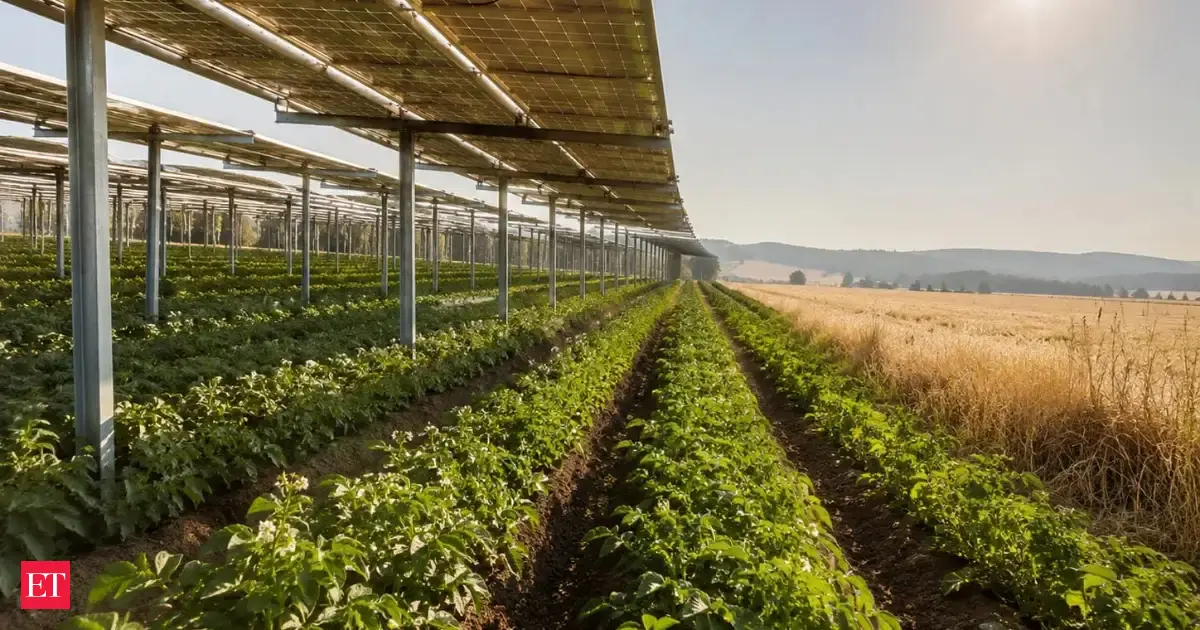
During the extreme European drought of 2018, most agricultural sectors reported significant yield losses. However, a unique study in Germany revealed a counterintuitive success story: potato crops planted beneath semi-transparent solar panels actually saw an 11% yield increase compared to those in traditional, open-field conditions.
This outcome highlights the growing potential of agrivoltaics—a dual-use farming strategy where solar energy generation and crop production coexist on the same land. For farmers grappling with increasing heat stress and soil moisture depletion, these structures provide more than just renewable energy; they act as a buffer against volatile weather patterns.
The shade provided by the panels mitigates the intensity of direct solar radiation, which is often excessive during heatwaves. By moderating the microclimate directly above the canopy, the panels reduce evapotranspiration. This keeps the soil cooler and retains moisture for longer periods, essentially serving as a passive irrigation-efficiency tool that protects crops from total dehydration.
While the investment costs for mounting high-clearance solar panels are significant, current EU energy transition policies are increasingly subsidizing decentralized renewable energy. For farms in high-sunlight regions or areas prone to drought, this represents a diversification strategy that creates a double revenue stream: income from energy production and improved resilience for high-value vegetable crops.
What this means for the market: If your farm operations are located in regions increasingly prone to drought, integrating agrivoltaic systems can serve as a risk-management asset that stabilizes yields and generates non-seasonal income. Consider exploring local subsidy programs for renewable energy, as these installations may qualify for green investment grants that offset initial capital expenditure.
— agronom.work editorial team