
AI Blueberry Harvester Tech Optimizes Yields and Cuts Waste
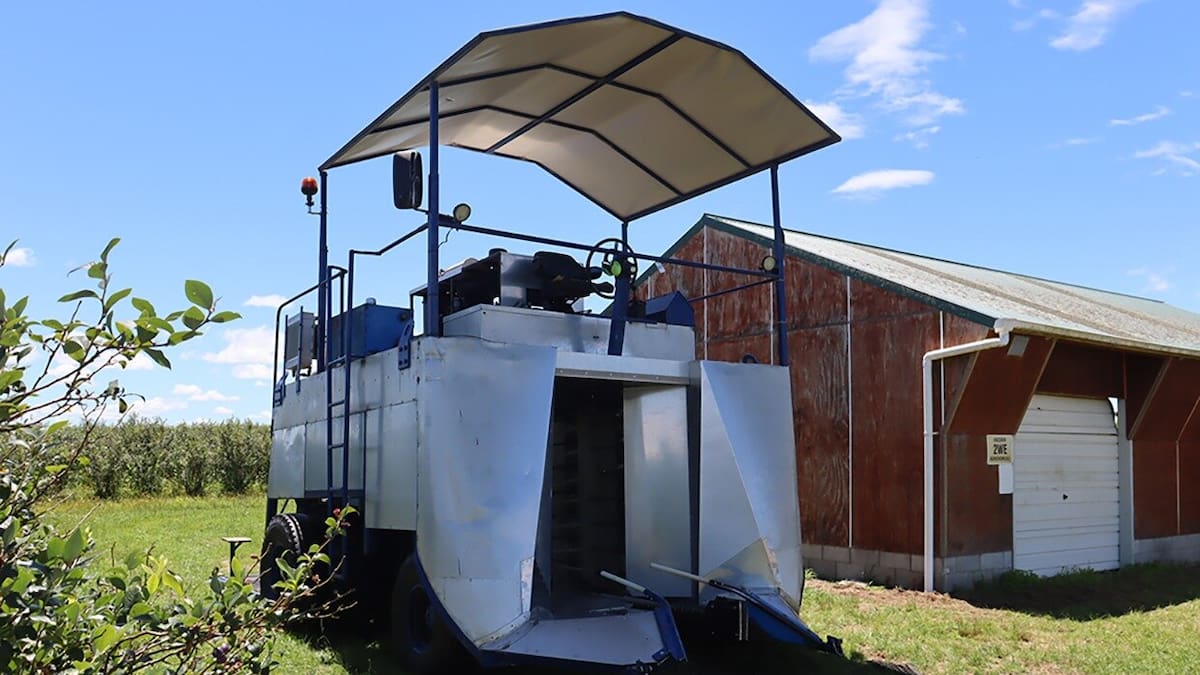
A new AI-driven harvester technology showcased at Fieldays 2026 aims to solve a persistent challenge in commercial blueberry farming: optimizing the mechanical "shake" to maximize the collection of ripe fruit while minimizing damage and the drop of green berries.
Traditional mechanical harvesting often relies on fixed vibration settings. If the shake is too aggressive, it can damage the bush structure and knock off unripe green berries, leading to significant crop waste. Conversely, if the intensity is too light, valuable ripe fruit is left behind on the plant, which reduces overall yield and may require costly manual labor for follow-up picking.
The newly presented solution utilizes artificial intelligence to analyze the harvested fruit in real time as it moves along the conveyor belt. By continuously monitoring the ratio of ripe to unripe berries and detecting debris, the system can calculate the optimal shaking force required. This allows operators—or eventually, autonomous systems—to adjust the harvester's intensity on the fly, ensuring a "just right" approach tailored to the specific field conditions.
For berry producers across Europe, particularly in leading cultivation regions like Poland and Germany, this level of precision automation is becoming increasingly critical. Faced with persistent seasonal labor shortages and rising operational costs, the ability to harvest cleaner loads directly in the field reduces sorting and grading time in the packhouse, directly improving profit margins.
What this means for the market: The integration of real-time AI feedback into mechanical harvesting equipment represents a shift from blunt automation to precision handling, offering soft-fruit growers a viable way to improve packout rates without increasing labor dependency.
— agronom.work editorial team