
Amazon’s Texas Data Center Cleared on 3,000 Acres of Farmland
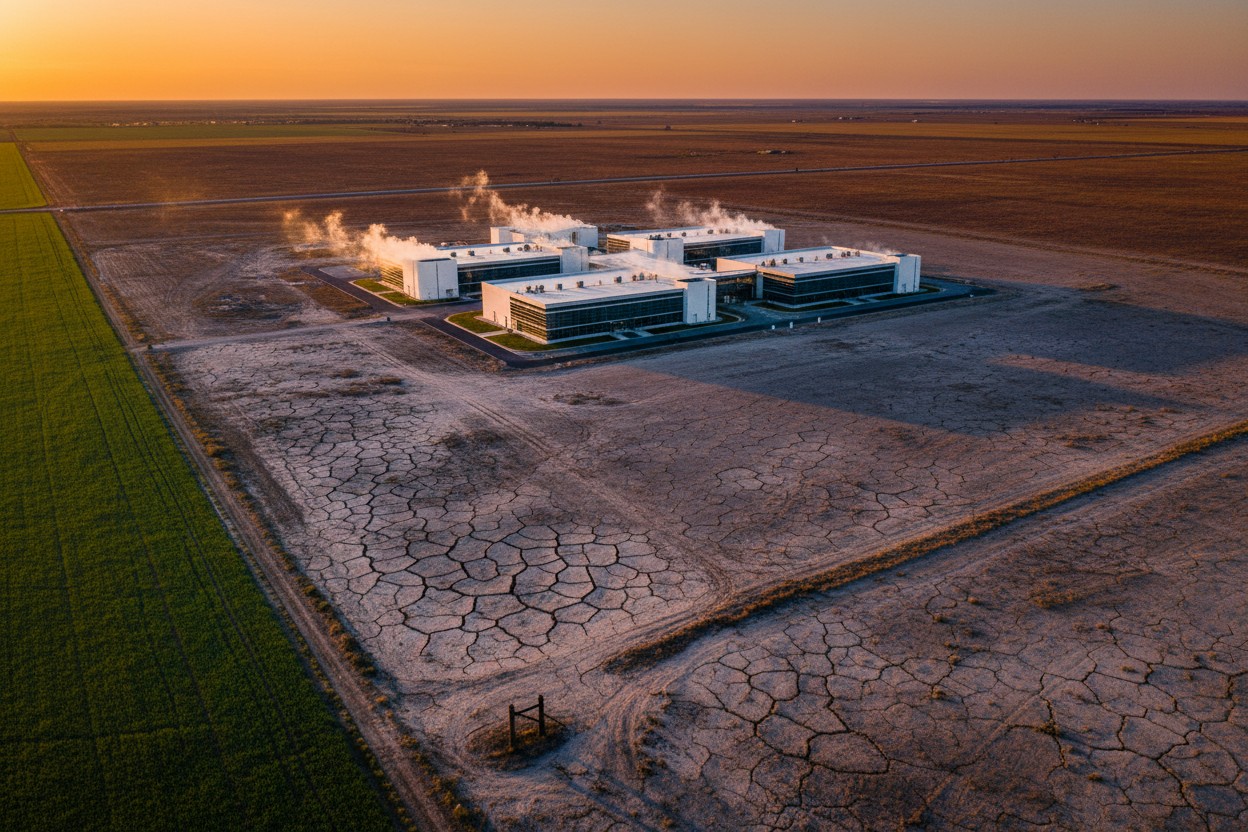
The rapid expansion of digital infrastructure is increasingly intersecting with prime agricultural real estate, raising concerns for farmers and rural communities globally. In Texas, regulatory approval has been granted for a sprawling 3,000-acre Amazon data center campus near Boling in Wharton County, transforming productive rural acreage into a digital fortress just south of Houston.
This development comes despite considerable public attention surrounding state-level political rhetoric aimed at curbing resource-intensive tech hubs. For the local agricultural economy, the conversion of large tracts of arable land into industrial tech parks represents a permanent shift. Farmland loss of this scale directly impacts regional crop production potential, local supply chains, and the availability of affordable acreage for young or expanding farming operations.
Data centers are notorious for their massive appetite for electricity and water—two critical inputs that frequently compete with agricultural needs. In regions prone to drought, such as parts of Texas, the establishment of heavy cooling infrastructure and massive grid demands can strain local water tables and elevate power tariffs for surrounding farms operating irrigation systems and grain dryers.
While such multi-billion-dollar investments inject significant tax revenue into rural counties, they often displace traditional crop farming and livestock grazing. Agronomists and local producers point out that once soil is paved over or dedicated to heavy electrical substations, returning it to agricultural productivity becomes economically and physically impossible.
What this means for the market: As tech infrastructure continues to expand into rural zones across North America and Europe, farmers facing adjacent industrial developments must anticipate higher competition for local grid capacity and water resources. Monitoring local zoning boards and land-use policies remains critical for protecting regional agricultural footprints.
— agronom.work editorial team