
Autonomous UV-C Robots Replace Fungicides on 600 Acres of Vineyards
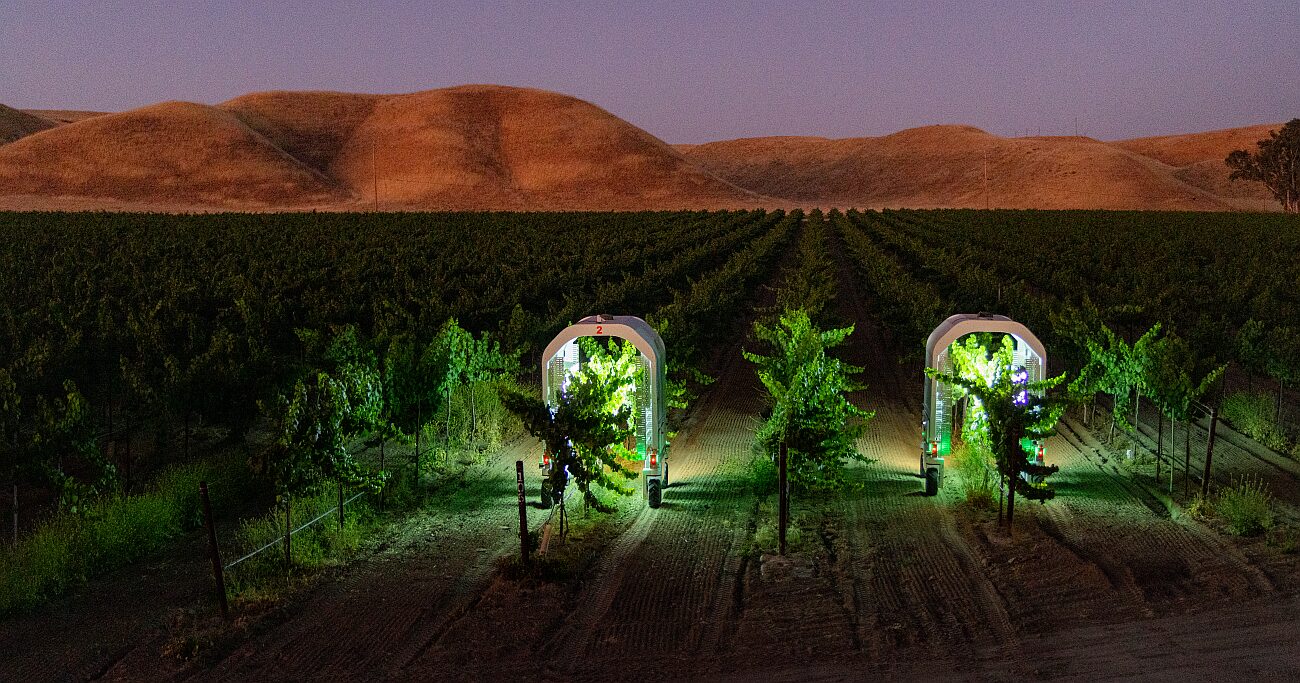
The transition from traditional spraying to autonomous light treatment is gaining serious momentum in commercial viticulture. Saga Robotics is scaling the deployment of its UV-C light-emitting Thorvald robots across more than 240 hectares (600 acres) of certified organic vineyards at Castoro Cellars in California. After three years of testing, the vineyard is moving away from conventional sulfur and oil applications to tackle powdery mildew on a massive scale.
The approach relies on precise timing and targeted physics rather than chemistry. The autonomous electric robots navigate the vineyard rows exclusively at night, delivering low doses of UV-C light directly to the vine canopy. Operating in darkness is essential, as daylight—specifically blue light—triggers a natural repair mechanism in fungi that reverses the damage caused by UV-C. This nocturnal light therapy effectively neutralizes the reproductive cycle of powdery mildew, botrytis, and sour rot.
For European growers, who are currently navigating strict EU regulations on pesticide reduction and the gradual phase-out of many synthetic active ingredients, this technology represents a highly relevant alternative. Even in organic farming, the continuous use of copper and sulfur can lead to heavy metal accumulation in soils. UV-C treatments offer a non-persistent, residue-free method that can replace 60% to 90% of conventional chemical applications, significantly lowering the ecological footprint of crop protection.
Beyond direct disease control, the shift to lightweight robotics addresses one of modern agriculture's most chronic problems: soil compaction. A conventional tractor equipped with a heavy spray rig can weigh anywhere from 4,500 to nearly 7,000 kilograms, severely compacting the soil with every pass. In stark contrast, the Thorvald robots weigh just under 365 kilograms. This massive reduction in weight preserves soil structure, enhances water infiltration, and promotes a healthier root environment.
The financial barrier to entry is also being restructured. Rather than requiring massive upfront capital investments, companies like Saga are offering a "Robots as a Service" (RaaS) model. Growers effectively rent the service per hectare, turning the technology into an operating expense that can be offset by immediate reductions in chemical purchases, tractor diesel, and manual labor. Furthermore, these machines are evolving into data-gathering platforms, with new camera integrations designed to predict yields and identify missing or diseased vines.
Practical takeaway: As European regulators continue to restrict conventional fungicides, UV-C robotics and RaaS models offer a viable pathway to maintain yields without heavy capital expenditure. Viticulturists and berry growers should evaluate autonomous light treatments not just for disease control, but for long-term soil preservation.
— agronom.work editorial team