
Could Data-Driven Surveillance Help Poultry Farmers Beat Bird Flu?
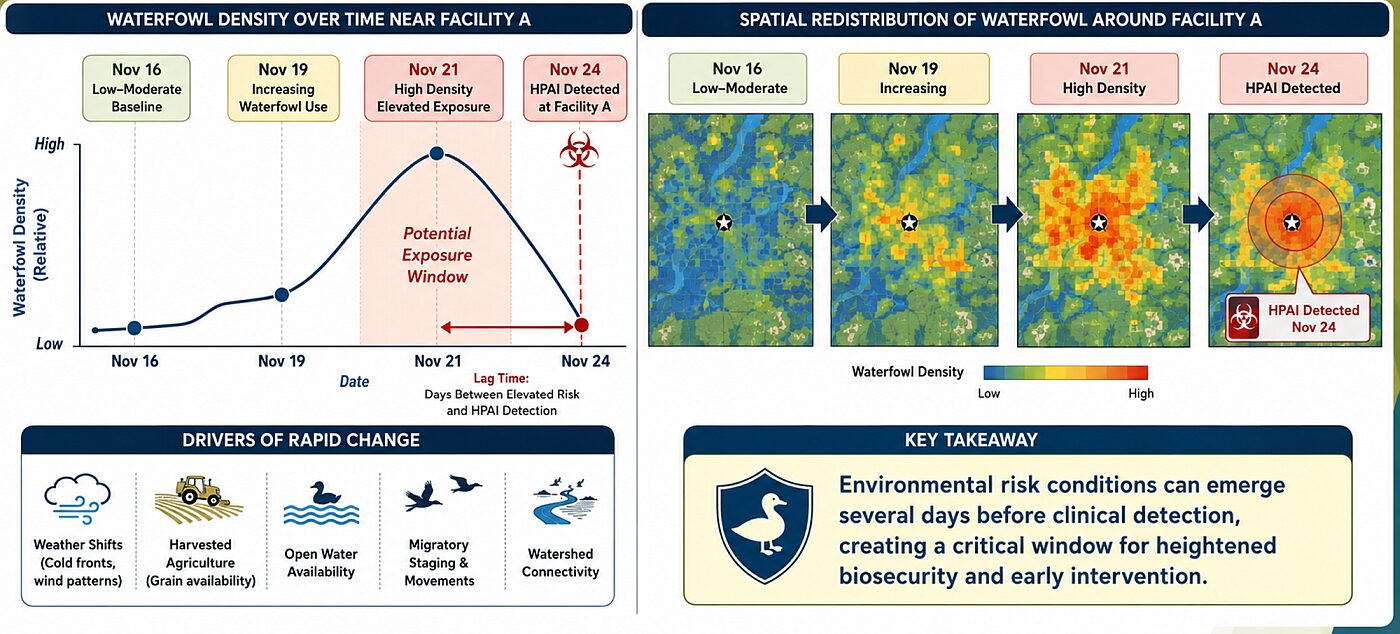
Avian influenza remains one of the most volatile risks for the poultry sector, with outbreaks forcing mass culls that devastate farm margins and disrupt supply chains. To combat this, a new collaboration between tech firms Alveo Technologies and AgriNerds aims to replace the traditional waiting game with a proactive surveillance model. By combining real-time tracking of wild bird populations with portable molecular diagnostics, the system promises to identify viral presence in under an hour, rather than waiting days for centralized lab results.
The system works by integrating satellite data, radar, and telemetry to track migratory wildfowl—the primary carriers of the virus. When this data indicates that a farm is in a high-risk zone due to waterfowl activity or weather patterns, producers receive alerts to intensify testing. This risk-based approach moves beyond static biosecurity, allowing farmers to ramp up vigilance only when the threat level increases, effectively managing the costs and labor associated with aggressive disease prevention.
For the average poultry producer, the bottleneck has always been the delay between the first signs of illness and confirmation. Current PCR-based lab testing can take several days, during which time a virus may spread through ventilation systems or staff movement to other barns. By offering lab-grade molecular testing in a portable device that yields results in 45 minutes, farmers can isolate infected barns much faster, potentially saving the rest of the flock from the total depopulation mandates that plague the industry.
The integration of on-farm data back into the prediction models offers another layer of intelligence. Geotagged test results could theoretically map the spread of the virus in real time, accounting for wind direction and feather dander dispersal. This could eventually allow for localized containment strategies, where a single barn can be quarantined and managed without necessitating the destruction of an entire multi-facility poultry complex.
Practical takeaway: Investing in rapid, on-site diagnostics and risk-monitoring software can help shift your operation from reactive loss management to proactive containment, potentially saving entire flocks by catching outbreaks in the asymptomatic stage.
— agronom.work editorial team