
Agritech Breakthrough: Cyanobacteria Transforms Desert Sand into Fertile Soil
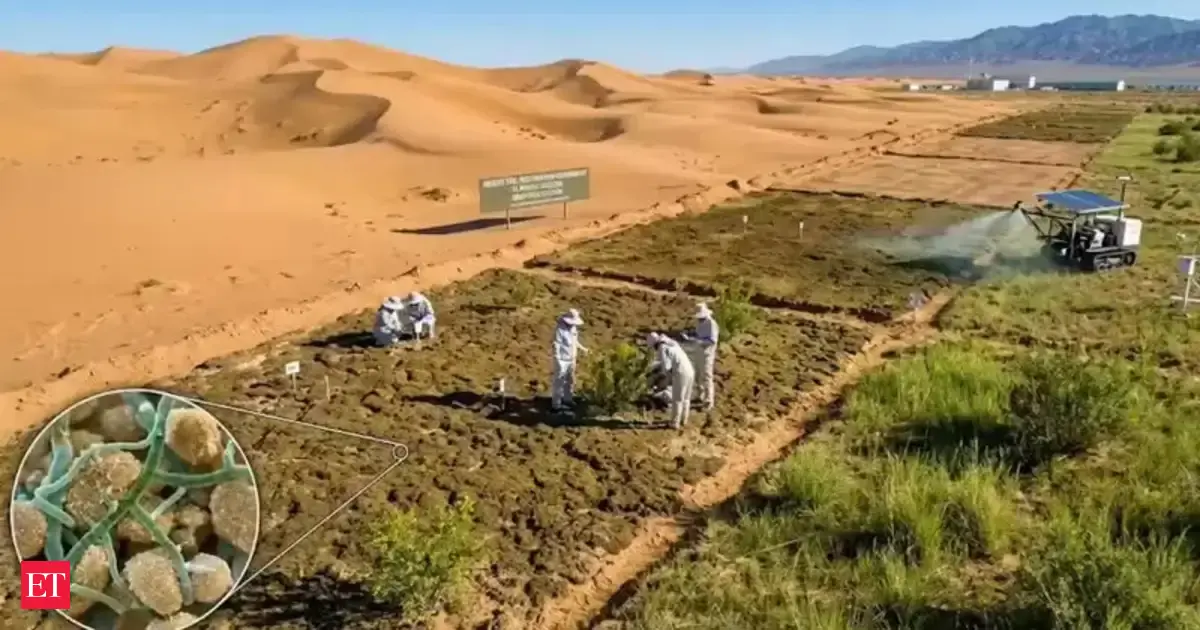
Soil degradation and desertification are among the most pressing challenges in global agriculture, increasingly threatening crop yields and arable land availability even across parts of Europe. Addressing this issue, researchers at the Shapotou Desert Experimental Research Station in China have achieved a significant breakthrough. They have developed an accelerated biological technique capable of transforming barren desert sand into fertile, plant-supporting soil in just 10 months, a process that traditionally takes decades or centuries.
The core of this innovation lies in the use of specific, highly resilient strains of cyanobacteria. When applied to the sand, these photosynthetic microorganisms rapidly multiply and secrete substances that bind the loose particles together. This process forms what agronomists call a 'biological soil crust' or biocrust. This living layer stabilizes the surface, preventing wind erosion while significantly improving the soil's capacity to retain moisture—a critical factor for plant survival in arid conditions.
Beyond physical stabilization, the cyanobacteria act as natural fertilizers. They pull nitrogen from the atmosphere and fix it into the soil, while also boosting carbon and other essential nutrient levels. For farm operations dealing with exhausted soils, this biological approach demonstrates how microbial interventions can jumpstart soil health and fertility without relying heavily on synthetic chemical inputs or massive irrigation infrastructure.
While this specific research targets extreme desert environments, the underlying principles hold immense potential for European agriculture. Farmers and agronomists in regions facing prolonged droughts, such as parts of Poland, Ukraine, and southern Europe, are increasingly dealing with soil that is drying out and losing its structural integrity. The application of cultivated biocrusts could eventually offer a scalable agritech solution to rehabilitate marginal lands and bring them back into productive agricultural use.
Context for farmers: This successful trial highlights a growing trend in agritech: moving beyond chemical amendments to leverage soil microbiomes for land restoration. While not commercially available for European fields today, similar microbial treatments could soon become a viable tool for improving soil moisture retention and combating drought-induced degradation on your farms.
— agronom.work editorial team