
Global Sulfur Market Projections Point to Rising Fertilizer Input Costs
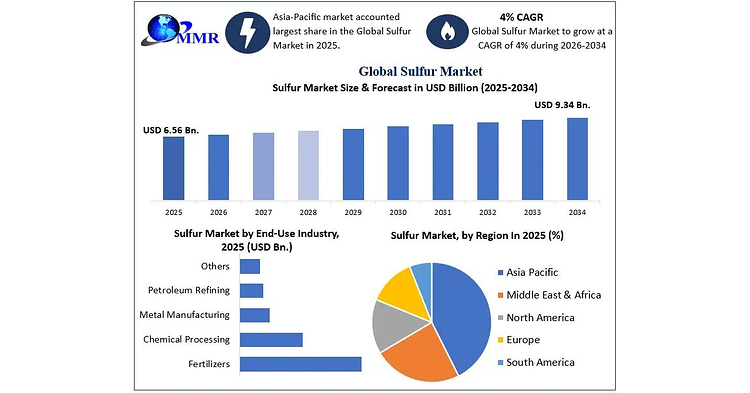
A recent comprehensive industry study from Maximize Market Research highlights the steady upward trajectory of the global sulfur market, projecting an increase from USD 6.56 billion in 2025 to USD 9.34 billion by 2034. Operating at a compound annual growth rate of roughly 4 percent, the sector's expansion is closely tied to fundamental industrial and chemical processing requirements across the globe.
For European farmers, agronomists, and fertilizer manufacturers, sulfur is far more than a minor chemical byproduct. It remains an absolute cornerstone of agricultural production, acting as a vital secondary nutrient required for optimal crop yields, particularly in oilseeds like rapeseed, as well as legumes and high-protein cereals grown widely across Poland, Germany, Ukraine, Romania, and the Netherlands.
The primary driver behind this steady market expansion is the continuous global demand for phosphate and sulfate-based mineral fertilizers. Sulfuric acid, produced directly from elemental sulfur, is consumed in massive quantities to acidify phosphate rock, turning it into soluble plant-available fertilizers such as single superphosphate and monoammonium phosphate.
Beyond its direct application in crop nutrition, sulfur availability heavily influences industrial supply chains that affect the entire agricultural ecosystem. From pesticide manufacturing and seed treatment chemistry to animal feed supplements and fuel desulfurization, fluctuations in sulfur pricing ripple rapidly down to input costs borne by agricultural producers.
As European agriculture navigates tightening environmental regulations, strict fertilizer application limits, and fluctuating input expenses, monitoring macro-trends in basic mineral markets becomes essential. Farm managers and agronomists must anticipate how industrial chemical shifts could translate into higher operational expenditures ahead of upcoming sowing campaigns.
What this means for the market: Steady growth in the global sulfur market signals that farm input costs related to sulfur-containing fertilizers and crop protection chemicals are unlikely to see major downward corrections in the medium term. Agronomists and farm managers should factor these persistent input price trends into their annual budgeting and nutrient management planning.
— agronom.work editorial team