
Could Hydroponic Wheat Experiments in Denmark Signal a Shift for Cereal Production?
A recent experimental project in Denmark has turned its attention to one of the most stubborn problems in global agriculture: the inefficiency of synthetic nitrogen fertilizer. While large-scale cereal production currently relies heavily on soil-based applications, studies show that crops frequently absorb less than half of the nitrogen provided, leading to significant groundwater contamination and emissions of nitrous oxide, a potent greenhouse gas.
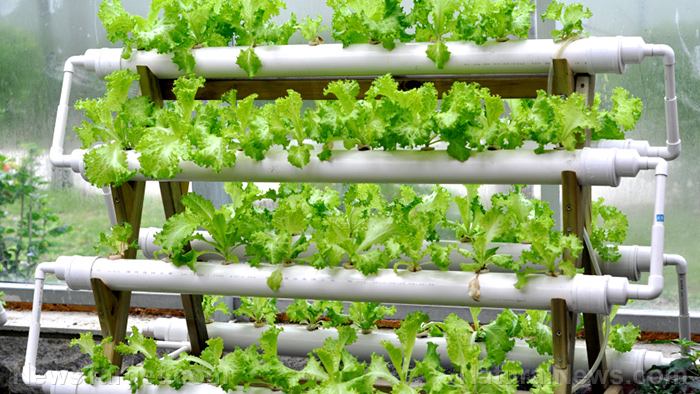
The Danish researchers are testing a closed-loop hydroponic system specifically tailored for wheat. By precisely controlling nutrient delivery at the root zone, the system aims to reach efficiency levels that are impossible in open-field soil cultivation, where rain and microbial activity often wash away or transform fertilizers before the plant can utilize them.
For European farmers, this development represents a potential pivot point. As the European Green Deal and the 'Farm to Fork' strategy push for a significant reduction in nutrient leakage by 2030, current mitigation methods—such as nitrification inhibitors—are proving to be costly and logistically difficult to manage across massive acreages. If hydroponic principles can be scaled, it might offer a path toward intensive production with a fraction of the current environmental footprint.
However, the transition from greenhouse trials to commercial viability remains the primary obstacle. Traditional wheat farming benefits from the low cost of soil and natural rainfall; a shift to hydroponics would require massive capital investment in infrastructure, climate control, and water management. For now, the technology is likely to remain in the experimental stage, serving as a blueprint for specialized operations rather than an immediate replacement for open-field farming.
Context for farmers: While commercial indoor wheat production is not yet viable for the average farm, the nutrient-management techniques developed in these trials may eventually lead to better precision-farming tools. Farmers should monitor how these controlled-environment technologies influence the next generation of liquid fertilizers and delivery systems designed to increase plant uptake and minimize runoff on traditional farms.
— agronom.work editorial team