
New Climate Risk Index Highlights Growing Liver Fluke Threat to European Livestock
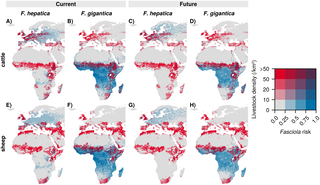
Livestock producers across Europe face a changing disease landscape as shifting climate patterns alter the geographical distribution and intensity of parasitic infections. A newly developed environmental risk index provides detailed insight into how fascioliasis — commonly known as liver fluke disease — responds to regional environmental shifts. Because the parasites responsible for this condition rely on freshwater snails as intermediate hosts, their lifecycle and transmission rates are deeply tied to moisture, temperature, and seasonal weather patterns.
For cattle and sheep farmers, liver fluke has long been a persistent health and economic challenge, leading to poor feed conversion, reduced milk yields, liver condemnations at slaughter, and occasionally sudden mortality in heavily infected herds. Traditional grazing management and routine anthelminthic treatments have been the primary defenses against Fasciola hepatica across temperate European regions. However, erratic rainfall and prolonged warm seasons are disrupting predictable disease windows, making standard parasite control schedules increasingly difficult to time effectively on farm.
The newly introduced risk index aims to address these operational hurdles by offering a more precise, environmentally driven forecasting approach. By mapping how temperature and water availability influence snail habitats and parasite development rates, the model helps identify vulnerable regions that previously experienced lower infection pressures. For agronomists and herd health advisors, this data provides a foundation for more proactive flock and herd management, moving away from blanket treatments toward targeted, data-driven interventions.
Integrating such environmental risk metrics into daily farm management aligns closely with the broader push toward sustainable livestock production and reduced chemical dependency across the European Union. Overusing anti-parasitic drugs risks accelerating resistance issues, which are already a growing concern in many intensive and semi-intensive grazing systems. Better early-warning systems allow livestock managers to deploy treatments only when and where environmental conditions actually trigger high transmission risks.
As European agriculture adapts to climate volatility, tools that translate macro-level environmental data into actionable on-farm insights will become increasingly vital for maintaining animal welfare and farm profitability. Livestock producers are encouraged to consult with their regional veterinary services and utilize advanced monitoring frameworks to adjust pasture rotation and grazing timelines in response to these shifting parasite dynamics.
— agronom.work editorial team