
EU Pesticide Import Curbs Could Tighten Supplies and Spike Food Costs
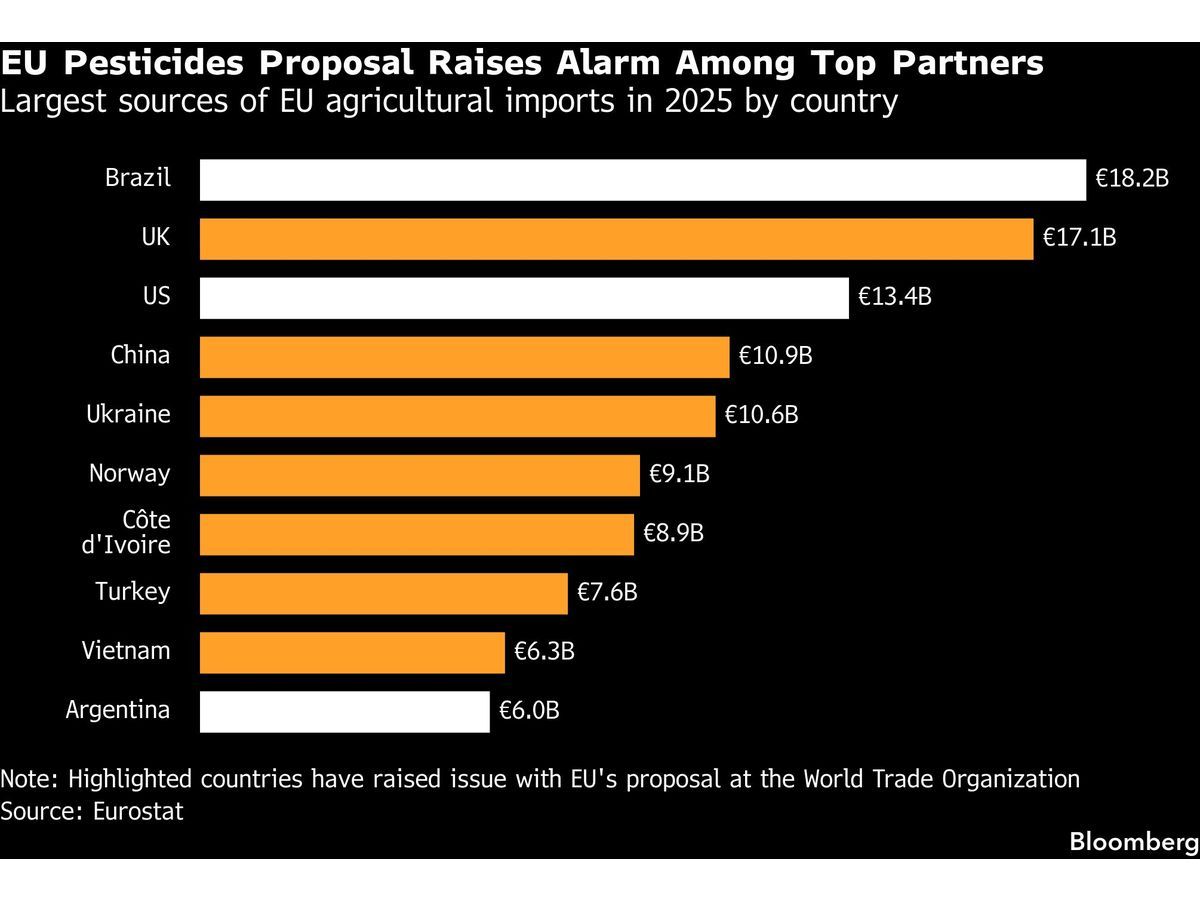
A recent European Union study highlights the potential economic fallout of tightening regulations on agricultural imports. The research focuses on the practice of importing food products treated with pesticides that are prohibited within the EU, suggesting that stringent bans on these commodities could significantly disrupt current supply chains.
For European farmers, this development is double-edged. On one hand, restricting the entry of cheaper, non-compliant imports could level the playing field, as European producers have long argued that they face unfair competition due to the higher environmental and safety standards imposed by Brussels. On the other hand, the study warns that a sudden reduction in global supply could trigger a surge in food prices, impacting both domestic markets and the cost of inputs for livestock sectors dependent on imported feed.
The policy debate revolves around the concept of "mirror clauses," which aim to ensure that imported products meet the same environmental and safety criteria as EU-grown crops. While popular among farm lobbies, international trade partners, including major exporters like Brazil and the United States, have flagged these measures as potential technical barriers to trade, threatening to challenge them through World Trade Organization channels.
For the average farm operator, this represents a transition toward a more protected but potentially more volatile market. Supply chains currently rely heavily on global availability of grains and oilseeds, and a shift in import strategy could force EU producers to expand domestic acreage or adjust crop rotations to compensate for the potential deficit in imported commodities.
What this means for the market: Producers should prepare for potential shifts in trade policy that may reduce the volume of cheap imported competition, which could support local prices but simultaneously increase input costs for animal feed. Staying informed on upcoming legislative developments regarding pesticide equivalence is essential for long-term farm planning and risk management.
— agronom.work editorial team