
Paperclip RNAs Offer New Hope for Pest and Fungal Control in Agriculture
Insects and fungal pathogens remain among the most persistent threats to European crop production, causing massive economic losses annually in staples like wheat, corn, and oilseed rape. Traditional chemical pesticides, while effective historically, face mounting challenges due to strict European Union pesticide regulations, environmental residue concerns, and rapidly evolving resistance among target organisms. Farmers across Poland, Germany, and neighboring regions are increasingly pressured to find sustainable alternatives that maintain high yields without harming beneficial soil microbiomes or pollinators.
A promising biological approach relies on RNA interference, or RNAi, which allows precise silencing of vital genes in specific pests or fungi without toxic chemical residues. However, a major bottleneck in agricultural biotechnology has been the delivery mechanism. Pest and fungal cells possess tough external barriers—such as insect cell membranes and fungal cell walls—that naturally restrict the uptake of naked RNA molecules, rendering field applications largely ineffective and economically unviable for broad-acre farming.
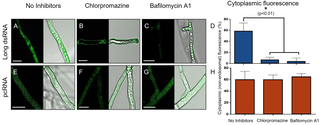
To overcome this limitation, a research team has engineered a novel molecular architecture known as paperclip RNAs. These uniquely folded RNA structures are specifically designed to bypass clathrin-mediated endocytosis, a cellular pathway that normally traps and degrades conventional RNA molecules before they can exert their biological effect. By slipping past these defensive cellular mechanisms, paperclip RNAs successfully enter target cells in both insect pests and fungal pathogens, triggering potent gene silencing and mortality.
For European agritech developers and crop protection companies, this breakthrough represents a potential paradigm shift in biological pest management. Unlike broad-spectrum synthetic chemistry, RNAi-based solutions can be tailored to target only destructive species—such as the Colorado potato beetle or powdery mildew fungi—while leaving non-target beneficial insects, mammals, and soil fauna unharmed. This precision aligns closely with the European Green Deal's Farm to Fork strategy, which aims to drastically reduce chemical pesticide usage across member states.
While these paperclip RNA structures are currently at an advanced research stage and not yet commercialized for farm-gate use, field trials and formulation improvements are expected to accelerate over the coming years. Agronomists and farm managers should monitor how these RNA delivery platforms transition from laboratory benches to commercial sprayable formulations, as they could soon form a cornerstone of integrated pest management programs in European agriculture.