
Predictive Energy Management Systems Tackle High-Load Challenges in Mountainous Orchards
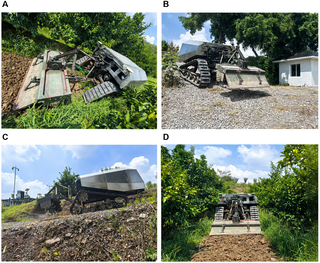
Operating agricultural machinery in sloped terrain and mountainous orchards presents severe mechanical challenges. Heavy implements, frequent stop-and-go operations, and unpredictable changes in soil rolling resistance create highly nonstationary power demands. Traditional rule-based energy management systems often fail to optimize fuel consumption or battery efficiency under these intense, fluctuating loads, leading to energy losses and increased mechanical wear.
To address this, recent studies published in scientific journals have focused on predictive-feedforward energy management strategies tailored specifically for hybrid agricultural vehicles. By anticipating load variations caused by steep gradients and changing soil conditions before they fully impact the powertrain, these advanced control algorithms can better balance the internal combustion engine and electric motor output. This dynamic adjustment is crucial for maintaining optimal operating points in hybrid drivetrains.
For fruit growers and farm managers in European regions featuring terraced or sloped orchards — such as parts of Germany, Poland, and southern Europe — fuel efficiency and machine longevity are vital bottom-line factors. Mountainous fruit production often relies on specialized, narrow-track tractors and tracked carriers that operate near their performance limits. Improving the energy efficiency of these hybrid units directly reduces operational costs and carbon footprints on farms.
Agtech developers and machinery manufacturers are increasingly looking at predictive control architectures to solve the problems of erratic power demand. By integrating sensor data on terrain slope and soil conditions with the vehicle's powertrain management, future commercial orchard equipment will likely offer smoother power delivery and extended battery lifespans for electric or hybrid systems. This transition aligns with broader European agricultural goals to electrify farm transport while overcoming the current limitations of battery autonomy in heavy-duty applications.
As these control strategies transition from academic research to commercial agricultural machinery, agronomists and equipment operators can expect smarter power modes tailored for difficult topography. While widespread market adoption will take time as manufacturers test these algorithms in real-world orchard environments, the technology promises to make mechanized fruit harvesting and orchard maintenance significantly more efficient in challenging topographies.