
Turkish Researchers Save Crater Lake Microbes to Combat Drought and Develop Biofertilizers
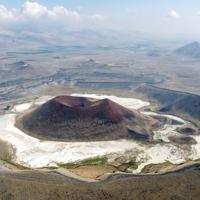
In the arid heartland of Türkiye’s Konya province, the iconic volcanic cone of Lake Meke stands amidst a severely cracked and dry lake bed, serving as a stark reminder of escalating water stress in the Mediterranean basin. As declining groundwater levels and prolonged droughts threaten local hydrological features, researchers have stepped in to salvage what remains of the lake's unique biological footprint. By sampling and storing extremophile microbes at ultra-low temperatures of minus 80 degrees Celsius, scientists are creating a biological archive designed to withstand future environmental shocks.
For the agricultural sector operating across the Central Anatolian plain—a major grain and vegetable-producing region—this conservation effort holds immense long-term value. Lake Meke's microorganisms have naturally adapted to extreme salinity, aridity, and high evaporation rates, traits that make them ideal candidates for agricultural biotechnology. Agronomists and researchers are closely watching these conservation initiatives, as they pave the way for isolating beneficial strains that can naturally enhance plant resilience against drought stress.
The primary applied objective of preserving these microbes is the development of next-generation biofertilizers and microbial inoculants. As chemical fertilizer costs fluctuate and regulatory pressures mount across Europe and neighboring agricultural markets, biological alternatives are gaining critical traction. Microbial biostimulants help crops optimize nutrient uptake, improve root architecture, and maintain metabolic function under severe moisture deficits, directly safeguarding yields in rainfed and poorly irrigated farming systems.
Integrating these specialized microbial solutions into standard farm operations could soon offer growers a viable tool to combat diminishing soil organic matter and climate-induced yield penalties. While commercializing extremophile-derived inputs requires rigorous field trials and scaling, the initial strain preservation marks a vital foundational step. Securing native microbial biodiversity ensures that future agronomic tools remain tailored to regional climatic pressures rather than imported generalized solutions.
What this means for the market: Although direct commercial products from Lake Meke's microbes are still in development, this initiative highlights the rising importance of extremophile biotechnology in shaping future farm inputs. Farmers and input suppliers should monitor how academic bio-repository projects translate into commercially viable biofertilizers designed to mitigate severe drought impacts on cereal and horticultural crops.
— agronom.work editorial team