
U.S. Diesel Price Spikes Signal Rising Energy Pressures for Global Agriculture
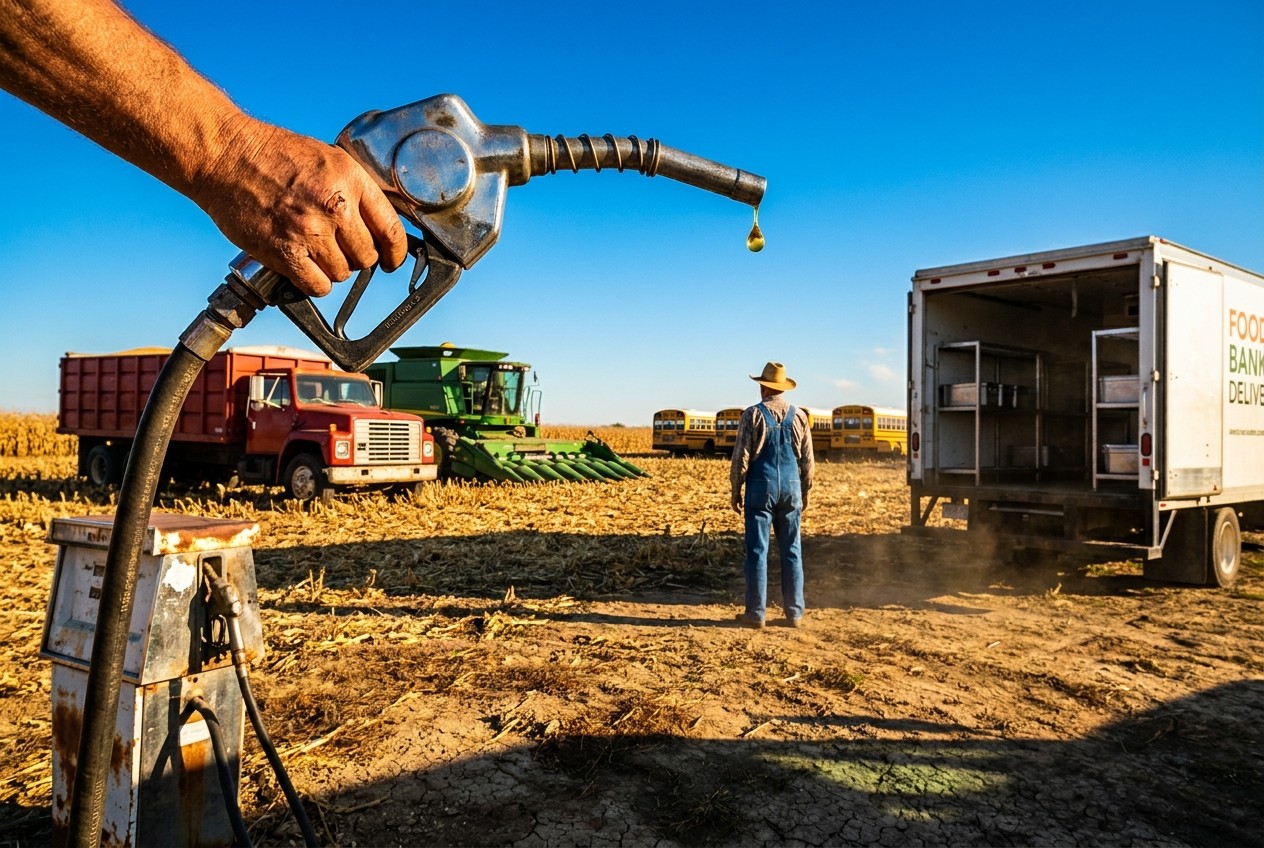
Recent energy market data from the United States shows average diesel prices remaining near historic peaks at approximately $6.50 a gallon, a dramatic surge compared to $3.69 a year ago. For farm operations, fuel represents one of the largest variable input costs, impacting everything from heavy tillage and planting to in-season crop protection and post-harvest drying. While these figures originate across the Atlantic, sustained high energy benchmarks in major exporting nations inevitably influence global oil products, maritime freight rates, and international fertilizer manufacturing expenses.
For European growers in countries like Poland, Germany, and the Netherlands, high diesel costs are a familiar and painful burden, but transatlantic trends heavily dictate international supply chain dynamics. Energy-intensive agricultural sectors such as grain logistics, dairy farming, and large-scale arable crop production bear the brunt of these price spikes. When fuel costs escalate during critical field operations—such as autumn secondary tillage or upcoming spring sowing—farm margins shrink rapidly unless output prices compensate for the deficit.
Input suppliers and agritech providers are increasingly under pressure to help farm businesses optimize fuel efficiency. Precision agriculture tools, including RTK-guided autosteer systems, variable-rate application, and telemetry-based fleet management, have transitioned from luxury investments to essential risk-mitigation strategies. By minimizing overlap during field passes and optimizing machinery routing, agronomists and farm managers can shave crucial percentages off their total diesel consumption per hectare.
Beyond direct field machinery operations, high fuel prices drive up the costs of commercial transport and agricultural freight. Moving grain from inland silos to export terminals in Northern Europe or processing plants in Central Europe becomes significantly more expensive. This logistical friction ultimately compresses farmgate prices while keeping retail food inflation elevated for consumers, creating a difficult balancing act for supply chain stakeholders.
What this means for the market: Persistent high diesel prices will force European producers to closely scrutinize field operations and accelerate the adoption of fuel-saving precision ag technologies ahead of the next intensive fieldwork cycle.
— agronom.work editorial team