
Wind Turbines on Farmland: Financial Security vs. Crop Production
Integrating renewable energy infrastructure into active agricultural land has become a strategic discussion point for farm management across North America and increasingly in Europe. The economic reality of modern crop production involves high input costs, fluctuating commodity prices, and unpredictable weather events that can quickly erode a season's profit margin. In this context, alternative revenue streams on family farms are gaining significant attention from agronomists and financial planners looking to secure long-term farm viability.
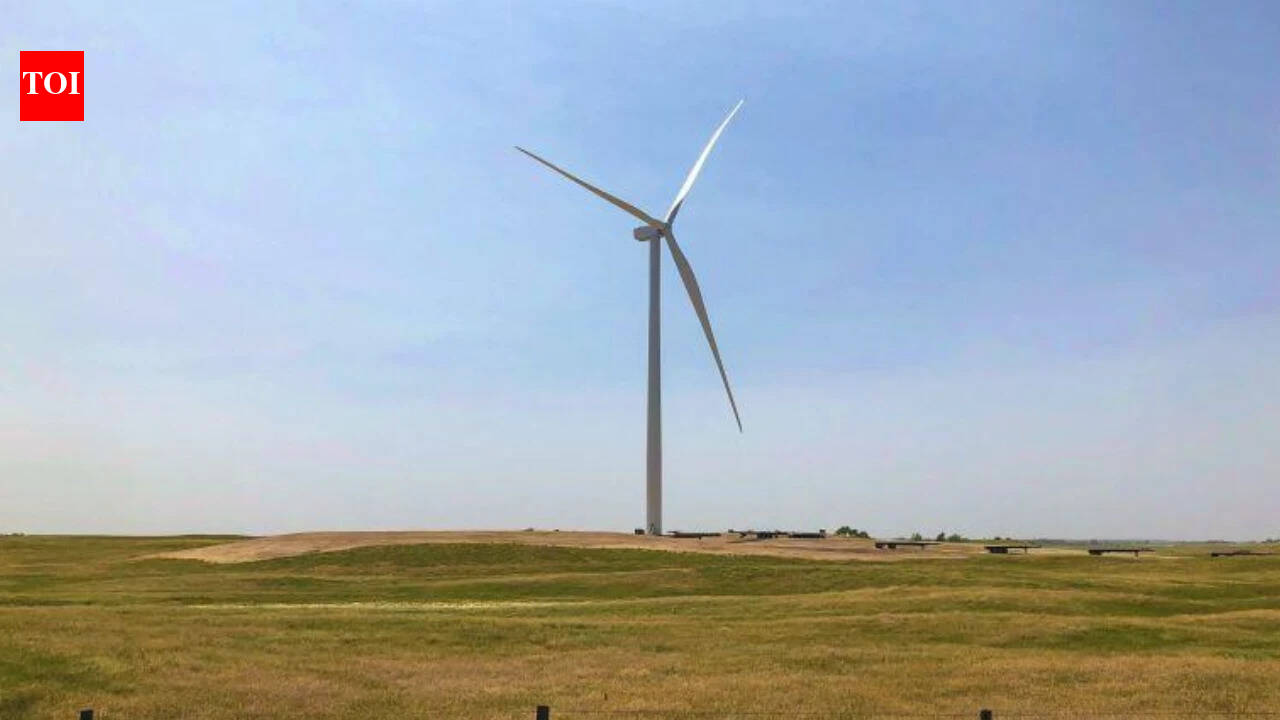
A recent operational example from Nebraska highlights the stark contrast between traditional row-crop returns and green energy leasing. On a 160-acre agricultural parcel, a single commercial wind turbine and its associated access infrastructure occupy approximately one acre of ground. The remaining 159 acres remain fully accessible for standard crop cultivation, allowing the farmer to maintain their primary agronomic output while simultaneously hosting industrial equipment.
According to data from developer Bluestem Energy Solutions cited in industry case studies, a standard 30-year land lease for such an installation yields between $10,000 and $12,500 annually. For comparison, the top-tier revenue generated from growing corn on that same single acre under optimal market and yield conditions typically hovers around $600 per year. This massive financial discrepancy underscores why renewable energy hosting is viewed by many agricultural landowners as a reliable financial buffer against market volatility.
For farm managers and landowners considering similar ventures, several operational factors must be evaluated. While the land footprint of a modern turbine is remarkably small, the construction phase involves heavy machinery, temporary access roads, and long-term utility right-of-ways that can temporarily disrupt drainage tiles, soil compaction, and field navigation patterns. Agronomists recommend careful pre-construction mapping and contractual clauses ensuring developers restore any damaged sub-surface tile drainage or compacted headlands.
Context for farmers: Diversifying farm income through wind or solar energy leases can provide guaranteed, inflation-resistant cash flow that dwarfs traditional per-acre crop revenues, but landowners must carefully negotiate multi-decade contracts to protect long-term soil health and machinery maneuverability.
— agronom.work editorial team